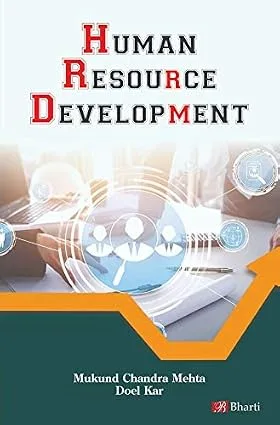
Human Resource Development
Doel Kar Dr. Mukund Chandra Mehta
Paperback
• 123 Pages
• inr 880.00
• English
• 978-9389657562
No ratings yet
| Publisher | Bharti Publications |
|---|---|
| Brand/Group | Bharti Publications |
| ISBN13 | 978-9389657562 |
| ASIN/SKU | 9389657563 |
| Book Format | Paperback |
| Language | English |
| Pages | 123 |
| List Price | inr 880.00 |
| Dimensions | 15.26 x 2.5 x 23.75 |
| Weight | 250 |
| Book Code | BD00067483 |
Discover Human Resource Development by Doel Kar Dr. Mukund Chandra Mehta. This book is published by Bharti Publications in Paperback format, ISBN 978-9389657562, ASIN 9389657563, under Human Resources.
Book Description
This book is to consolidate all the Units of the Syllabus of Human Resource Development to help the students and teachers to easily understand the concepts of HRD. The text book is part of the M. Com syllabus of Ranchi University and also shall prove to be informative for BBA, BBM, B. Com, MBA and MPM students. The book consists of three units associated with Human Resource Development namely its Introduction, HRD Processes that are commonly used and Activities and Application of HRD. Human Resource Development is the part of human resource management that specifically deals with training and development of the employees in the organization. This book provides an understanding of the concept of Human Resource Development (HRD) system, related mechanisms and the changing boundaries of Human Resource Development (HRD).
Author Biography
Author Biography will be added soon…
Editorial Reviews
Editorial Reviews will be added soon…
Book Summary
Human Resource Development** is a comprehensive and academically structured textbook designed to provide students, teachers, researchers, and management professionals with a thorough understanding of the concepts, principles, processes, and applications of Human Resource Development (HRD). Developed in accordance with the M.Com curriculum of Ranchi University, the book also serves as a valuable learning resource for students pursuing BBA, BBM, B.Com, MBA, MPM, and other management and commerce programmes. It presents the subject in a simple, systematic, and learner-friendly manner, enabling readers to develop both conceptual clarity and practical insight into the field of Human Resource Development.
In today's rapidly changing business environment, organizations recognize that their greatest asset is their people. The success and sustainability of any organization depend largely on the competence, motivation, creativity, and commitment of its workforce. Human Resource Development plays a vital role in enhancing these qualities by focusing on the continuous development of employees through education, training, career planning, performance management, and organizational development. This book explains these concepts in a logical sequence, helping readers understand how HRD contributes to individual growth as well as organizational effectiveness.
The book is divided into three comprehensive units, each addressing a major dimension of Human Resource Development. The first unit introduces the fundamental concepts of HRD and provides a strong theoretical foundation. It discusses the meaning, objectives, scope, importance, and evolution of Human Resource Development while distinguishing HRD from Human Resource Management (HRM). Readers gain an understanding of the philosophy, principles, and significance of developing human resources as strategic assets in modern organizations. The unit also explores the role of HRD in improving organizational productivity, employee satisfaction, and competitive advantage while emphasizing the need for continuous learning in an increasingly dynamic business environment.
The second unit focuses on the various HRD processes that organizations adopt to enhance employee performance and organizational efficiency. It explains the systematic approaches to employee training and development, performance appraisal, career planning, succession planning, mentoring, coaching, competency mapping, and employee counselling. The unit demonstrates how these interconnected processes contribute to building a skilled, motivated, and adaptable workforce capable of meeting present and future organizational challenges. Practical explanations of each process enable readers to appreciate their implementation in real-world organizational settings. Special attention is given to identifying training needs, designing effective development programmes, evaluating employee performance, and creating opportunities for career advancement, making the subject relevant to both academic learning and professional practice.
The third unit examines the activities and practical applications of Human Resource Development across different organizational contexts. It highlights the role of HRD in improving organizational culture, fostering teamwork, managing organizational change, promoting leadership development, and enhancing employee engagement. The unit also explores organizational development interventions, quality of work life, knowledge management, talent management, and strategies for building high-performance organizations. Readers are introduced to the practical challenges of implementing HRD initiatives and the methods through which organizations create an environment of continuous learning, innovation, and employee empowerment. The discussions emphasize that HRD is not merely a support function but a strategic partner that contributes directly to organizational success and sustainable growth.
One of the major strengths of this book lies in its balanced integration of theoretical concepts and practical applications. Every topic is presented in a simple and lucid language supported by appropriate examples, illustrations, diagrams, and structured explanations. Complex theories are broken down into easily understandable sections, making the book highly accessible to students from different academic backgrounds. The content has been organized in a logical flow that facilitates progressive learning, enabling readers to move from basic concepts to advanced applications without difficulty.
The book also reflects the changing boundaries of Human Resource Development in response to globalization, technological advancement, digital transformation, and changing workforce expectations. Modern organizations require employees who possess not only technical competence but also interpersonal skills, leadership abilities, adaptability, creativity, and emotional intelligence. The text discusses how HRD systems contribute to developing these competencies through continuous learning, competency-based development, leadership training, and organizational learning initiatives. It further highlights the importance of lifelong learning and continuous professional development in today's knowledge-driven economy.
Another significant feature of the book is its academic orientation aligned with university examination requirements while maintaining strong practical relevance. Important concepts are explained systematically to assist students in preparing for examinations, assignments, classroom discussions, seminars, and competitive examinations. Simultaneously, the practical orientation of the subject makes the book useful for HR practitioners, managers, trainers, consultants, and professionals seeking to understand the strategic role of HRD within organizations.
The text also encourages readers to develop a broader perspective on people management by emphasizing ethical leadership, employee well-being, organizational commitment, diversity management, and inclusive workplace practices. It demonstrates that effective Human Resource Development extends beyond training programmes and encompasses the creation of organizational systems that nurture talent, encourage innovation, and promote employee satisfaction. Such an approach helps organizations remain resilient, productive, and competitive in an era characterized by constant change and uncertainty.
Overall, **Human Resource Development** serves as a comprehensive guide to understanding the theory and practice of developing human capital in organizations. It successfully bridges the gap between academic knowledge and managerial application by presenting the subject in a clear, systematic, and practical manner. Whether used as a university textbook or a professional reference, the book equips readers with the knowledge and analytical skills required to appreciate the strategic importance of Human Resource Development in achieving individual excellence and organizational success. Through its well-organized structure, contemporary perspective, and learner-centric approach, the book becomes an indispensable resource for students, educators, researchers, and professionals interested in the dynamic and evolving field of Human Resource Development.
In today's rapidly changing business environment, organizations recognize that their greatest asset is their people. The success and sustainability of any organization depend largely on the competence, motivation, creativity, and commitment of its workforce. Human Resource Development plays a vital role in enhancing these qualities by focusing on the continuous development of employees through education, training, career planning, performance management, and organizational development. This book explains these concepts in a logical sequence, helping readers understand how HRD contributes to individual growth as well as organizational effectiveness.
The book is divided into three comprehensive units, each addressing a major dimension of Human Resource Development. The first unit introduces the fundamental concepts of HRD and provides a strong theoretical foundation. It discusses the meaning, objectives, scope, importance, and evolution of Human Resource Development while distinguishing HRD from Human Resource Management (HRM). Readers gain an understanding of the philosophy, principles, and significance of developing human resources as strategic assets in modern organizations. The unit also explores the role of HRD in improving organizational productivity, employee satisfaction, and competitive advantage while emphasizing the need for continuous learning in an increasingly dynamic business environment.
The second unit focuses on the various HRD processes that organizations adopt to enhance employee performance and organizational efficiency. It explains the systematic approaches to employee training and development, performance appraisal, career planning, succession planning, mentoring, coaching, competency mapping, and employee counselling. The unit demonstrates how these interconnected processes contribute to building a skilled, motivated, and adaptable workforce capable of meeting present and future organizational challenges. Practical explanations of each process enable readers to appreciate their implementation in real-world organizational settings. Special attention is given to identifying training needs, designing effective development programmes, evaluating employee performance, and creating opportunities for career advancement, making the subject relevant to both academic learning and professional practice.
The third unit examines the activities and practical applications of Human Resource Development across different organizational contexts. It highlights the role of HRD in improving organizational culture, fostering teamwork, managing organizational change, promoting leadership development, and enhancing employee engagement. The unit also explores organizational development interventions, quality of work life, knowledge management, talent management, and strategies for building high-performance organizations. Readers are introduced to the practical challenges of implementing HRD initiatives and the methods through which organizations create an environment of continuous learning, innovation, and employee empowerment. The discussions emphasize that HRD is not merely a support function but a strategic partner that contributes directly to organizational success and sustainable growth.
One of the major strengths of this book lies in its balanced integration of theoretical concepts and practical applications. Every topic is presented in a simple and lucid language supported by appropriate examples, illustrations, diagrams, and structured explanations. Complex theories are broken down into easily understandable sections, making the book highly accessible to students from different academic backgrounds. The content has been organized in a logical flow that facilitates progressive learning, enabling readers to move from basic concepts to advanced applications without difficulty.
The book also reflects the changing boundaries of Human Resource Development in response to globalization, technological advancement, digital transformation, and changing workforce expectations. Modern organizations require employees who possess not only technical competence but also interpersonal skills, leadership abilities, adaptability, creativity, and emotional intelligence. The text discusses how HRD systems contribute to developing these competencies through continuous learning, competency-based development, leadership training, and organizational learning initiatives. It further highlights the importance of lifelong learning and continuous professional development in today's knowledge-driven economy.
Another significant feature of the book is its academic orientation aligned with university examination requirements while maintaining strong practical relevance. Important concepts are explained systematically to assist students in preparing for examinations, assignments, classroom discussions, seminars, and competitive examinations. Simultaneously, the practical orientation of the subject makes the book useful for HR practitioners, managers, trainers, consultants, and professionals seeking to understand the strategic role of HRD within organizations.
The text also encourages readers to develop a broader perspective on people management by emphasizing ethical leadership, employee well-being, organizational commitment, diversity management, and inclusive workplace practices. It demonstrates that effective Human Resource Development extends beyond training programmes and encompasses the creation of organizational systems that nurture talent, encourage innovation, and promote employee satisfaction. Such an approach helps organizations remain resilient, productive, and competitive in an era characterized by constant change and uncertainty.
Overall, **Human Resource Development** serves as a comprehensive guide to understanding the theory and practice of developing human capital in organizations. It successfully bridges the gap between academic knowledge and managerial application by presenting the subject in a clear, systematic, and practical manner. Whether used as a university textbook or a professional reference, the book equips readers with the knowledge and analytical skills required to appreciate the strategic importance of Human Resource Development in achieving individual excellence and organizational success. Through its well-organized structure, contemporary perspective, and learner-centric approach, the book becomes an indispensable resource for students, educators, researchers, and professionals interested in the dynamic and evolving field of Human Resource Development.
Sample Chapters
Sample Chapters will be added soon…
Build Author or Publisher Website in Minutes
- Design a stunning professional website in minutes to showcase your portfolio, new releases, series, and bestselling titles.
- Use world-class cataloging software to create the metadata of your books. You will forget managing your metadata in excel.
- Share your large cover image and real-time metadata in with the publishing industry.
- Promote your books seamlessly across the Booksdata.org ecosystem and connect directly with a highly engaged reading community.