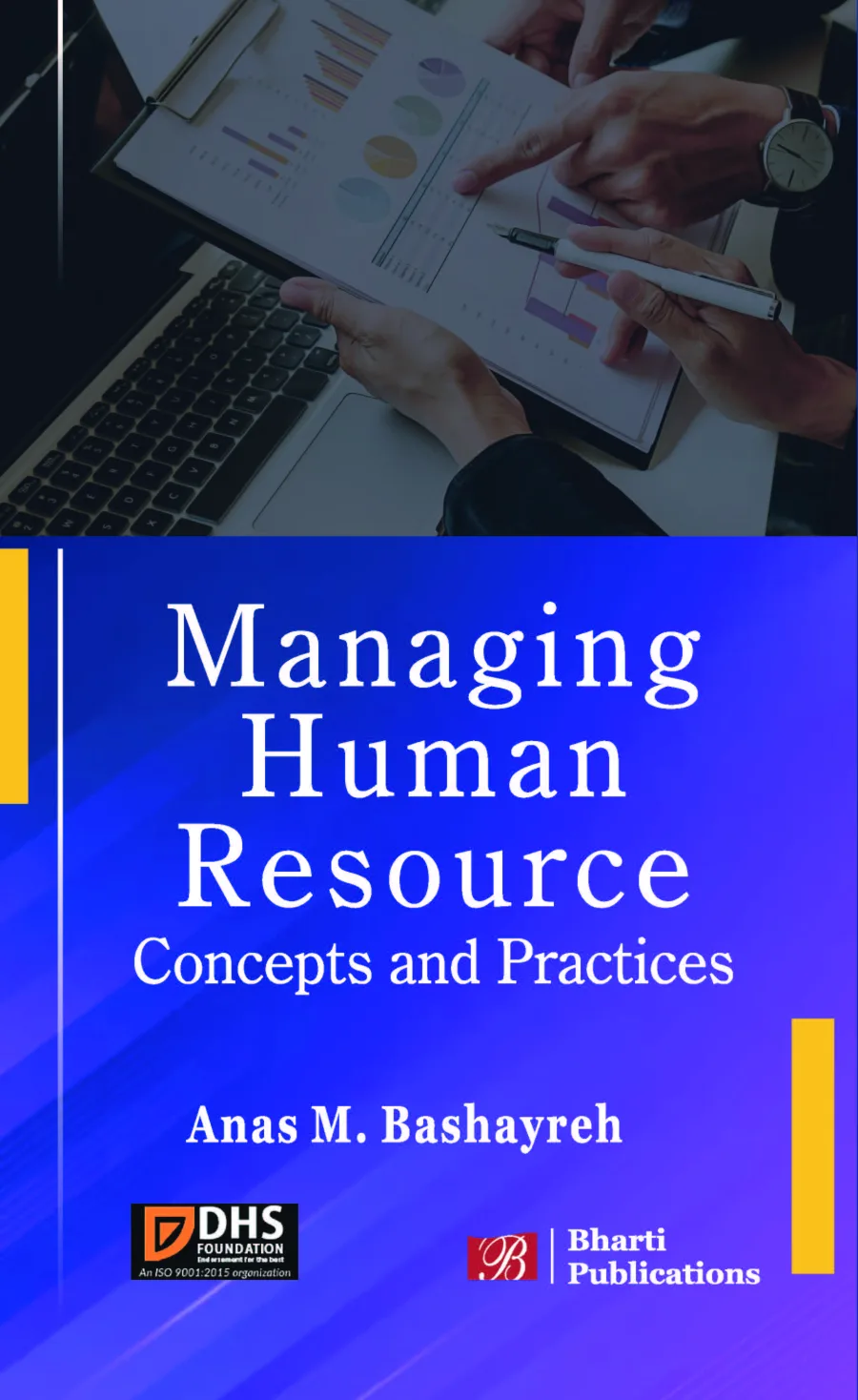
Managing Human Resource: Concepts and Practices
Unknown Format
• 216 Pages
• inr 780.00
• English
• 9788119079087
No ratings yet
| Publisher | Bharti Publications |
|---|---|
| Brand/Group | Bharti Publications |
| ISBN13 | 9788119079087 |
| ASIN/SKU | 8119079086 |
| Book Format | Unknown Format |
| Language | English |
| Pages | 216 |
| List Price | inr 780.00 |
| Dimensions | 15 x 2.25 x 21.25 |
| Weight | 340 |
| Book Code | BD00067496 |
Discover Managing Human Resource: Concepts and Practices by Anas M. Bashayreh. This book is published by Bharti Publications in Unknown Format format, ISBN 9788119079087, ASIN 8119079086, under Human Resources, Management.
Book Description
Human resource management (HRM) is a critical function in organizations that deals with managing employees to achieve organizational goals. The book on Human Resource Management provides an in-depth understanding of the concepts, principles, and practices involved in HRM. The book covers a wide range of topics, Human starting with an introduction to HRM, its evolution, and its Resource importance in modern organizations. The author explains the Concepts and Practices various functions of HRM, including recruitment and selection, training and development, performance management, compensation, and employee relations. The book also covers contemporary issues in HRM, such as diversity and inclusion, work-life balance, and employee engagement. The author provides insights into the challenges that organizations face in managing human resources and provides strategies for addressing them. One of the strengths of this book is its emphasis on practical applications of HRM concepts. The author provides numerous real-life examples, case studies, and exercises that help readers apply the concepts they learn to real-world situations. Another strength of the book is its focus on global perspectives on HRM. The author discusses the challenges of managing human resources in different parts of the world, including cultural differences, legal and regulatory issues, and economic factors. Overall, the book provides a comprehensive and practical guide to HRM that is useful for students, HR professionals, and anyone interested in managing human resources effectively.
Author Biography
Anas M. Bashayreh is an Assistant Professor in HRM in the department of Managerial and Financial Sciences at Al Zahraa College for Women, Oman since 2016. He received a PhD degree in HRM (2014). He was formerly an Assistant Professor in Human Resource Management at Petra University, Jordan.
Editorial Reviews
Editorial Reviews will be added soon…
Book Summary
Human Resource Management: Concepts and Practices** is a comprehensive and application-oriented textbook that offers an in-depth understanding of the principles, functions, and contemporary practices of Human Resource Management (HRM). Designed to meet the academic requirements of students while also serving as a practical guide for professionals, the book presents HRM as a strategic function that contributes significantly to organizational success. It provides readers with a balanced blend of theoretical foundations, practical insights, and real-world applications, making it a valuable resource for students of B.Com, BBA, BBM, MBA, M.Com, MPM, and other management programmes, as well as HR practitioners and business leaders.
In today's dynamic and highly competitive business environment, organizations recognize that their people are their most valuable assets. The ability to attract, develop, motivate, and retain talented employees has become a key determinant of organizational performance and long-term sustainability. Human Resource Management plays a pivotal role in achieving these objectives by aligning employee capabilities with organizational goals and fostering a productive, innovative, and inclusive work environment. This book introduces readers to the strategic importance of HRM and demonstrates how effective people management contributes to organizational growth, employee satisfaction, and competitive advantage.
The book begins with a detailed introduction to the concept, evolution, nature, scope, and objectives of Human Resource Management. It traces the historical development of HRM from traditional personnel management to a modern strategic function that actively participates in organizational decision-making. Readers gain an understanding of the changing role of human resources in response to globalization, technological advancements, digital transformation, and evolving workforce expectations. The book also highlights the importance of ethical management practices, organizational culture, and employee well-being in creating sustainable organizations.
A major focus of the book is the various functional areas of Human Resource Management. It provides comprehensive coverage of recruitment and selection, explaining the processes involved in attracting, identifying, and hiring competent employees. Readers are introduced to modern recruitment techniques, selection methods, interviewing processes, and assessment tools that enable organizations to recruit individuals with the right skills and competencies. The discussion emphasizes the importance of fairness, transparency, and equal employment opportunities throughout the recruitment process.
The book also explores training and development as essential components of organizational success. It explains how organizations identify training needs, design effective learning programmes, evaluate training outcomes, and promote continuous employee development. The importance of career planning, leadership development, skill enhancement, and organizational learning is discussed in detail, enabling readers to understand how investment in employee development contributes to improved performance and long-term organizational effectiveness.
Performance management is another key area covered extensively in the book. The author explains the principles and methods of performance appraisal, performance measurement, feedback mechanisms, goal setting, and performance improvement strategies. Readers learn how organizations use performance management systems to evaluate employee contributions, identify development needs, recognize achievements, and support career progression. The discussion highlights the role of objective evaluation and constructive feedback in enhancing employee motivation and organizational productivity.
The text also provides detailed insights into compensation and reward management. It discusses wage and salary administration, incentive systems, employee benefits, compensation policies, and reward strategies designed to motivate employees and improve organizational commitment. The book explains how fair and competitive compensation systems contribute to employee satisfaction, retention, and organizational competitiveness while ensuring compliance with labour laws and ethical standards.
Employee relations form another significant aspect of the book. The author examines the importance of maintaining healthy relationships between employers and employees through effective communication, grievance handling, collective bargaining, conflict resolution, and employee participation. The role of labour laws, trade unions, industrial relations, workplace discipline, and employee welfare is explained in a practical and balanced manner. Readers gain an understanding of how positive employee relations contribute to organizational harmony, higher productivity, and reduced workplace conflicts.
Recognizing the rapidly changing nature of workplaces, the book also addresses several contemporary issues in Human Resource Management. Topics such as diversity and inclusion, work-life balance, employee engagement, talent management, remote work, digital HR practices, and organizational resilience are discussed in the context of modern business environments. The author explains how organizations can create inclusive workplaces that value diversity, promote equal opportunities, and support employee well-being while adapting to technological and social changes. These discussions prepare readers to understand the evolving challenges faced by HR professionals in the twenty-first century.
One of the distinguishing features of this book is its strong emphasis on practical application. Rather than presenting concepts in isolation, the author integrates numerous real-life examples, organizational illustrations, case studies, discussion questions, and practical exercises throughout the text. These learning tools enable readers to relate theoretical concepts to actual workplace situations, develop analytical thinking, and strengthen their problem-solving abilities. Students benefit from enhanced conceptual clarity, while practitioners gain practical strategies that can be implemented within their organizations.
Another notable strength of the book is its global perspective on Human Resource Management. In an increasingly interconnected world, organizations frequently operate across national boundaries and manage culturally diverse workforces. The book examines the challenges of international HRM, including cultural diversity, cross-cultural communication, international staffing, expatriate management, legal and regulatory frameworks, and the impact of economic and social factors on human resource policies. By presenting HRM from both domestic and international perspectives, the book equips readers with the knowledge required to manage employees effectively in global business environments.
The language of the book is clear, concise, and easy to understand, making complex HRM concepts accessible to readers with varying levels of academic and professional experience. Each topic is presented systematically with logical progression, supported by diagrams, illustrations, tables, and examples that simplify learning and improve comprehension. The structured approach also makes the book an excellent reference for classroom teaching, examination preparation, competitive examinations, and professional development programmes.
Overall, **Human Resource Management: Concepts and Practices** serves as a comprehensive guide to understanding the strategic role of Human Resource Management in contemporary organizations. By combining conceptual knowledge with practical applications and global perspectives, the book successfully bridges the gap between academic theory and organizational practice. It equips readers with the knowledge, skills, and critical understanding necessary to manage human resources effectively in a rapidly changing business environment. Whether used as a university textbook, a professional reference, or a self-learning resource, this book provides valuable insights into the principles and practices that shape successful organizations through effective management of their most important asset—their people.
In today's dynamic and highly competitive business environment, organizations recognize that their people are their most valuable assets. The ability to attract, develop, motivate, and retain talented employees has become a key determinant of organizational performance and long-term sustainability. Human Resource Management plays a pivotal role in achieving these objectives by aligning employee capabilities with organizational goals and fostering a productive, innovative, and inclusive work environment. This book introduces readers to the strategic importance of HRM and demonstrates how effective people management contributes to organizational growth, employee satisfaction, and competitive advantage.
The book begins with a detailed introduction to the concept, evolution, nature, scope, and objectives of Human Resource Management. It traces the historical development of HRM from traditional personnel management to a modern strategic function that actively participates in organizational decision-making. Readers gain an understanding of the changing role of human resources in response to globalization, technological advancements, digital transformation, and evolving workforce expectations. The book also highlights the importance of ethical management practices, organizational culture, and employee well-being in creating sustainable organizations.
A major focus of the book is the various functional areas of Human Resource Management. It provides comprehensive coverage of recruitment and selection, explaining the processes involved in attracting, identifying, and hiring competent employees. Readers are introduced to modern recruitment techniques, selection methods, interviewing processes, and assessment tools that enable organizations to recruit individuals with the right skills and competencies. The discussion emphasizes the importance of fairness, transparency, and equal employment opportunities throughout the recruitment process.
The book also explores training and development as essential components of organizational success. It explains how organizations identify training needs, design effective learning programmes, evaluate training outcomes, and promote continuous employee development. The importance of career planning, leadership development, skill enhancement, and organizational learning is discussed in detail, enabling readers to understand how investment in employee development contributes to improved performance and long-term organizational effectiveness.
Performance management is another key area covered extensively in the book. The author explains the principles and methods of performance appraisal, performance measurement, feedback mechanisms, goal setting, and performance improvement strategies. Readers learn how organizations use performance management systems to evaluate employee contributions, identify development needs, recognize achievements, and support career progression. The discussion highlights the role of objective evaluation and constructive feedback in enhancing employee motivation and organizational productivity.
The text also provides detailed insights into compensation and reward management. It discusses wage and salary administration, incentive systems, employee benefits, compensation policies, and reward strategies designed to motivate employees and improve organizational commitment. The book explains how fair and competitive compensation systems contribute to employee satisfaction, retention, and organizational competitiveness while ensuring compliance with labour laws and ethical standards.
Employee relations form another significant aspect of the book. The author examines the importance of maintaining healthy relationships between employers and employees through effective communication, grievance handling, collective bargaining, conflict resolution, and employee participation. The role of labour laws, trade unions, industrial relations, workplace discipline, and employee welfare is explained in a practical and balanced manner. Readers gain an understanding of how positive employee relations contribute to organizational harmony, higher productivity, and reduced workplace conflicts.
Recognizing the rapidly changing nature of workplaces, the book also addresses several contemporary issues in Human Resource Management. Topics such as diversity and inclusion, work-life balance, employee engagement, talent management, remote work, digital HR practices, and organizational resilience are discussed in the context of modern business environments. The author explains how organizations can create inclusive workplaces that value diversity, promote equal opportunities, and support employee well-being while adapting to technological and social changes. These discussions prepare readers to understand the evolving challenges faced by HR professionals in the twenty-first century.
One of the distinguishing features of this book is its strong emphasis on practical application. Rather than presenting concepts in isolation, the author integrates numerous real-life examples, organizational illustrations, case studies, discussion questions, and practical exercises throughout the text. These learning tools enable readers to relate theoretical concepts to actual workplace situations, develop analytical thinking, and strengthen their problem-solving abilities. Students benefit from enhanced conceptual clarity, while practitioners gain practical strategies that can be implemented within their organizations.
Another notable strength of the book is its global perspective on Human Resource Management. In an increasingly interconnected world, organizations frequently operate across national boundaries and manage culturally diverse workforces. The book examines the challenges of international HRM, including cultural diversity, cross-cultural communication, international staffing, expatriate management, legal and regulatory frameworks, and the impact of economic and social factors on human resource policies. By presenting HRM from both domestic and international perspectives, the book equips readers with the knowledge required to manage employees effectively in global business environments.
The language of the book is clear, concise, and easy to understand, making complex HRM concepts accessible to readers with varying levels of academic and professional experience. Each topic is presented systematically with logical progression, supported by diagrams, illustrations, tables, and examples that simplify learning and improve comprehension. The structured approach also makes the book an excellent reference for classroom teaching, examination preparation, competitive examinations, and professional development programmes.
Overall, **Human Resource Management: Concepts and Practices** serves as a comprehensive guide to understanding the strategic role of Human Resource Management in contemporary organizations. By combining conceptual knowledge with practical applications and global perspectives, the book successfully bridges the gap between academic theory and organizational practice. It equips readers with the knowledge, skills, and critical understanding necessary to manage human resources effectively in a rapidly changing business environment. Whether used as a university textbook, a professional reference, or a self-learning resource, this book provides valuable insights into the principles and practices that shape successful organizations through effective management of their most important asset—their people.
Sample Chapters
Sample Chapters will be added soon…
Build Author or Publisher Website in Minutes
- Design a stunning professional website in minutes to showcase your portfolio, new releases, series, and bestselling titles.
- Use world-class cataloging software to create the metadata of your books. You will forget managing your metadata in excel.
- Share your large cover image and real-time metadata in with the publishing industry.
- Promote your books seamlessly across the Booksdata.org ecosystem and connect directly with a highly engaged reading community.