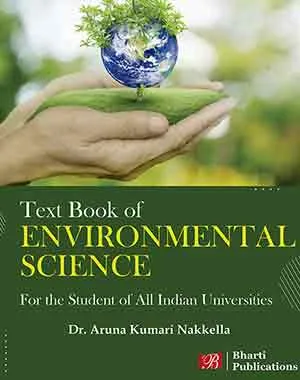
A Text Book of Environmental Science
Paperback
• 352 Pages
• inr 445.00
• English
• 9789391681999
No ratings yet
| Publisher | Bharti Publications |
|---|---|
| Brand/Group | Bharti Publications |
| ISBN13 | 9789391681999 |
| ASIN/SKU | 9391681999 |
| Book Format | Paperback |
| Language | English |
| Pages | 352 |
| List Price | inr 445.00 |
| Publishing Date | 01/01/2022 |
| Dimensions | 18 x 2.25 x 23.75 |
| Weight | 480 |
| Book Code | BD00069410 |
Discover A Text Book of Environmental Science by Dr. Aruna Kumari Nakkella. This book is published by Bharti Publications in Paperback format, ISBN 9789391681999, ASIN 9391681999, under Environment, Earth Sciences.
Book Description
About the Book Environmental Science provides an overview of how science affects our environment. We focus on interactions between the solid Earth, its water, its air and its living organisms, and on dynamic, interdependent relationships between these four components. Environmental Science is an interdisciplinary field that combines aspects of Physics, Chemistry, Biology, Ecology, Geography, Zoology, Mineralogy, Oceanography, Soil Science, Geology, and to study the nature of the environment, its problems and solutions. Environmental science is the study of the interactions between physical, chemical and biological components of the Earth's natural environment. These components include energy, agriculture, water and air. Environmental science closely examines the human impact on the environment. Environmental science promotes the study and understanding of natural and human-caused processes in our natural environment. By researching and investigating complex environmental issues, students develop and enhance essential skills such as critical thinking, problem-solving, and creative thinking. Renewable Energy. Urban Ecology. Remote Sensing and Geographic Information Systems. Bioremediation. Noise and Light Pollution. Limnology. Conservation Biology. Environmental Justice. By reading this book, a reader can get the technical, practical, and theoretical skills. Technical skills Conduct research and fieldwork of the soil, sediments, and groundwater Develop policies and procedures for preventing and managing environmental issues Offer guidance on reducing environmental and health risks to public, private, and government agencies Practical skills Data management and processing Software skills for basic and applied sciences Communication for collaboration and dissemination Theoretical skills Scientific method Scientific theory Scientific laws
Author Biography
Dr. Aruna Kumari Nakkella has been involved in search for innovative measures to study the anology of Engineering Chemistry for more than a decade. She has a vast experience in teaching field over 15 years in various streams of Engineering. Presently she is working as Assistant Professor in Engineering Chemistry and Acting as Assistant Principal, College of Engineering, Dr BR Ambedkar University, Etcherla, Srikakulam. Accomplishing the strategies of Engineering Chemistry, she has been awarded her Doctorate in Chemistry from Andhra University, Visakhapatnam. She not only accumulating with the present sources, but also challenging to generate new sources for teaching chemistry. For that, she also achieved Post Graduate Diploma in Environmental Science from Andhra University.
Editorial Reviews
Editorial Reviews will be added soon…
Book Summary
Environmental Science is a comprehensive and interdisciplinary textbook that explores the intricate relationships between the Earth's natural systems and human society. Designed to meet the academic needs of undergraduate and postgraduate students, educators, researchers, and environmental professionals, the book provides a balanced understanding of environmental processes, contemporary challenges, and sustainable solutions. It integrates scientific principles with practical applications, enabling readers to appreciate the complexity of environmental systems and their significance in everyday life.
The book begins by introducing the fundamental concepts of environmental science, highlighting the interactions among the Earth's four major components—land (lithosphere), water (hydrosphere), air (atmosphere), and living organisms (biosphere). It explains how these interconnected systems function together to maintain ecological balance and sustain life on Earth. Through a systematic approach, readers gain a clear understanding of natural processes and the consequences of human activities on the environment.
Recognising environmental science as an interdisciplinary field, the book incorporates concepts from Physics, Chemistry, Biology, Ecology, Geography, Geology, Zoology, Mineralogy, Oceanography, and Soil Science. This integrated perspective enables readers to understand the physical, chemical, and biological processes that govern environmental systems while appreciating the importance of scientific collaboration in addressing complex environmental issues.
A major focus of the book is the study of environmental problems arising from rapid industrialisation, urbanisation, population growth, and unsustainable resource utilisation. Topics such as air, water, soil, noise, and light pollution are discussed in detail, along with their causes, impacts, and mitigation strategies. The text also examines climate change, biodiversity loss, ecosystem degradation, waste management, and environmental conservation, encouraging readers to develop a scientific and responsible approach towards protecting natural resources.
The book further explores emerging and contemporary areas of environmental science, including renewable energy, urban ecology, conservation biology, bioremediation, limnology, environmental justice, and the application of Remote Sensing and Geographic Information Systems (GIS). These topics reflect recent developments in environmental research and demonstrate how modern technologies contribute to environmental monitoring, planning, resource management, and sustainable development.
One of the distinguishing features of this book is its emphasis on developing analytical and practical competencies alongside theoretical knowledge. Readers are introduced to scientific methods, environmental theories, and established scientific laws that form the foundation of environmental studies. Numerous examples, illustrations, and real-world applications help bridge the gap between classroom learning and practical implementation.
The book also focuses on building essential technical and professional skills required in environmental sciences. Readers gain an understanding of research methodologies, field investigations involving soil, sediments, and groundwater, environmental monitoring techniques, and policy formulation for environmental protection. Practical guidance is provided on data collection, management, processing, and interpretation, along with the use of software tools commonly employed in environmental analysis and applied sciences. Communication and collaborative skills necessary for scientific reporting and environmental decision-making are also highlighted.
In addition to academic learning, the book promotes critical thinking, problem-solving, and creative reasoning through the study of complex environmental challenges. By examining real-life environmental issues and their solutions, readers develop the ability to analyse situations scientifically and propose sustainable management strategies that balance environmental conservation with economic and social development.
Written in a clear, systematic, and reader-friendly style, **Environmental Science** serves as both a textbook and a practical reference for students, teachers, researchers, policymakers, and environmental practitioners. Its comprehensive coverage of foundational concepts, emerging technologies, environmental policies, and sustainable practices makes it a valuable resource for understanding the dynamic relationship between humans and the natural environment.
Overall, this book equips readers with the theoretical knowledge, technical expertise, and practical skills necessary to understand environmental systems, address pressing environmental challenges, and contribute meaningfully towards building a cleaner, healthier, and more sustainable future.
The book begins by introducing the fundamental concepts of environmental science, highlighting the interactions among the Earth's four major components—land (lithosphere), water (hydrosphere), air (atmosphere), and living organisms (biosphere). It explains how these interconnected systems function together to maintain ecological balance and sustain life on Earth. Through a systematic approach, readers gain a clear understanding of natural processes and the consequences of human activities on the environment.
Recognising environmental science as an interdisciplinary field, the book incorporates concepts from Physics, Chemistry, Biology, Ecology, Geography, Geology, Zoology, Mineralogy, Oceanography, and Soil Science. This integrated perspective enables readers to understand the physical, chemical, and biological processes that govern environmental systems while appreciating the importance of scientific collaboration in addressing complex environmental issues.
A major focus of the book is the study of environmental problems arising from rapid industrialisation, urbanisation, population growth, and unsustainable resource utilisation. Topics such as air, water, soil, noise, and light pollution are discussed in detail, along with their causes, impacts, and mitigation strategies. The text also examines climate change, biodiversity loss, ecosystem degradation, waste management, and environmental conservation, encouraging readers to develop a scientific and responsible approach towards protecting natural resources.
The book further explores emerging and contemporary areas of environmental science, including renewable energy, urban ecology, conservation biology, bioremediation, limnology, environmental justice, and the application of Remote Sensing and Geographic Information Systems (GIS). These topics reflect recent developments in environmental research and demonstrate how modern technologies contribute to environmental monitoring, planning, resource management, and sustainable development.
One of the distinguishing features of this book is its emphasis on developing analytical and practical competencies alongside theoretical knowledge. Readers are introduced to scientific methods, environmental theories, and established scientific laws that form the foundation of environmental studies. Numerous examples, illustrations, and real-world applications help bridge the gap between classroom learning and practical implementation.
The book also focuses on building essential technical and professional skills required in environmental sciences. Readers gain an understanding of research methodologies, field investigations involving soil, sediments, and groundwater, environmental monitoring techniques, and policy formulation for environmental protection. Practical guidance is provided on data collection, management, processing, and interpretation, along with the use of software tools commonly employed in environmental analysis and applied sciences. Communication and collaborative skills necessary for scientific reporting and environmental decision-making are also highlighted.
In addition to academic learning, the book promotes critical thinking, problem-solving, and creative reasoning through the study of complex environmental challenges. By examining real-life environmental issues and their solutions, readers develop the ability to analyse situations scientifically and propose sustainable management strategies that balance environmental conservation with economic and social development.
Written in a clear, systematic, and reader-friendly style, **Environmental Science** serves as both a textbook and a practical reference for students, teachers, researchers, policymakers, and environmental practitioners. Its comprehensive coverage of foundational concepts, emerging technologies, environmental policies, and sustainable practices makes it a valuable resource for understanding the dynamic relationship between humans and the natural environment.
Overall, this book equips readers with the theoretical knowledge, technical expertise, and practical skills necessary to understand environmental systems, address pressing environmental challenges, and contribute meaningfully towards building a cleaner, healthier, and more sustainable future.
Sample Chapters
Sample Chapters will be added soon…
Build Author or Publisher Website in Minutes
- Design a stunning professional website in minutes to showcase your portfolio, new releases, series, and bestselling titles.
- Use world-class cataloging software to create the metadata of your books. You will forget managing your metadata in excel.
- Share your large cover image and real-time metadata in with the publishing industry.
- Promote your books seamlessly across the Booksdata.org ecosystem and connect directly with a highly engaged reading community.