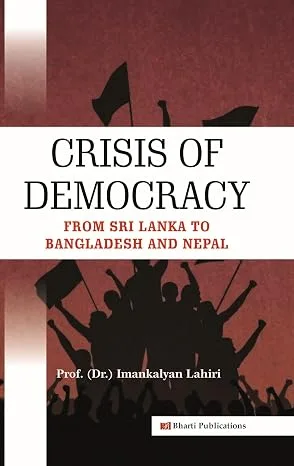
Crisis of Democracy: From Sri Lanka to Bangladesh and Nepal
Hardcover
• 439 Pages
• inr 1660.00
• English
• 9789347303098
No ratings yet
| Publisher | Bharti Publications |
|---|---|
| Brand/Group | Bharti Publications |
| ISBN13 | 9789347303098 |
| ASIN/SKU | 9347303097 |
| Book Format | Hardcover |
| Language | English |
| Pages | 439 |
| List Price | inr 1660.00 |
| Publishing Date | 19/01/2026 |
| Dimensions | 15 x 4 x 21.5 |
| Weight | 475 |
| Book Code | BD00069467 |
Discover Crisis of Democracy: From Sri Lanka to Bangladesh and Nepal by Prof. (Dr.) Imankalyan Lahiri. This book is published by Bharti Publications in Hardcover format, ISBN 9789347303098, ASIN 9347303097.
Book Description
Democracy rarely collapses in South Asia with the drama of tanks on the streets or constitutions formally suspended. This volume emerges from that ambiguity. It is written in the shadow of repeated political crises in Sri Lanka, Bangladesh, and Nepal—crises that differ in origin and trajectory yet converge in their implications. These are not merely national stories of governance failure or political miscalculation. They are symptoms of a deeper structural condition that afflicts postcolonial democracies more broadly: the unresolved tension between popular sovereignty and elite control, between mass participation and institutional fragility, between democratic aspiration and authoritarian temptation.
This volume therefore approaches democracy not as a settled achievement but as a contested terrain. It asks uncomfortable questions. Can democracy survive when institutions are formally intact but substantively hollow? What happens when elections legitimise power without constraining it? How do societies respond when legality becomes a tool of domination rather than protection? And perhaps most importantly, what does democratic renewal look like in contexts where the liberal script itself is under strain? The chapters that follow do not offer easy answers, nor do they converge on a single theoretical position. That is a strength rather than a limitation. The diversity of perspectives—spanning media studies, political theory, psychology, history, and sociology—reflects the complexity of the democratic crisis itself. No single framework can capture its full texture. Huntington helps us see the cycle; Levitsky and Ziblatt alert us to the method;
Taken together, these approaches suggest that democracy in South Asia is not simply declining—it is being transformed. This book is an invitation to that rethinking. It does not mourn democracy’s passing, nor does it romanticise resistance. Instead, it insists on intellectual seriousness at a moment when slogans and certainties are dangerously seductive. In doing so, it contributes to a broader global conversation about democracy’s future—one in which South Asia is not a peripheral case, but a central and instructive site of political possibility and peril.
This volume therefore approaches democracy not as a settled achievement but as a contested terrain. It asks uncomfortable questions. Can democracy survive when institutions are formally intact but substantively hollow? What happens when elections legitimise power without constraining it? How do societies respond when legality becomes a tool of domination rather than protection? And perhaps most importantly, what does democratic renewal look like in contexts where the liberal script itself is under strain? The chapters that follow do not offer easy answers, nor do they converge on a single theoretical position. That is a strength rather than a limitation. The diversity of perspectives—spanning media studies, political theory, psychology, history, and sociology—reflects the complexity of the democratic crisis itself. No single framework can capture its full texture. Huntington helps us see the cycle; Levitsky and Ziblatt alert us to the method;
Taken together, these approaches suggest that democracy in South Asia is not simply declining—it is being transformed. This book is an invitation to that rethinking. It does not mourn democracy’s passing, nor does it romanticise resistance. Instead, it insists on intellectual seriousness at a moment when slogans and certainties are dangerously seductive. In doing so, it contributes to a broader global conversation about democracy’s future—one in which South Asia is not a peripheral case, but a central and instructive site of political possibility and peril.
Author Biography
Prof. (Dr.) Imankalyan Lahiri is a Professor of International Relations at Jadavpur University, Kolkata, where he served as Head of the Department from 2021 to 2023. He currently serves as the General Secretary of the Jadavpur Association of International Relations (JAIR).
A leading scholar of India’s Act East Policy, Asia–Pacific geopolitics, and non-traditional security, Professor Lahiri has authored several notable works, including Peace, Development and Community: The Look East Imagination of India (KW Publishers, 2017) and The Challenge of Terrorism (Ministry of External Affairs, Government of India). His research has appeared in reputed international journals published by Sage, Nature–Springer, and other leading academic presses.
Professor Lahiri has undertaken collaborative research with the Nordic Institute of Asian Studies (NIAS), Copenhagen, focusing on India’s foreign policy, regional connectivity, and strategic studies in Asia. His international engagements include serving as a Visiting Fellow at the University of South Carolina under the U.S. Summer Institute Programme, where he deepened his expertise in global governance. He has also represented the Indian Council of Social Science Research (ICSSR) in a high-profile delegation to the Chinese Academy of Social Sciences (CASS), Beijing, exploring Sino–Indian relations and East Asian regional dynamics.
He participated in the G-20 Summit events in New Delhi, contributing to academic and policy dialogues on global governance and regional cooperation. In addition, Professor Lahiri works closely with the British Deputy High Commission, Kolkata, on initiatives promoting academic exchange, strategic dialogue, and Indo–UK cooperation in education and foreign policy studies.
Beyond his international engagements, Professor Lahiri has authored widely used Political Science textbooks for West Bengal’s higher secondary curriculum. He has also collaborated extensively with the Policy Planning and Research Division of the Ministry of External Affairs, UNICEF, and other leading organizations on projects related to policy research, strategic communication, and developmental governance.
A leading scholar of India’s Act East Policy, Asia–Pacific geopolitics, and non-traditional security, Professor Lahiri has authored several notable works, including Peace, Development and Community: The Look East Imagination of India (KW Publishers, 2017) and The Challenge of Terrorism (Ministry of External Affairs, Government of India). His research has appeared in reputed international journals published by Sage, Nature–Springer, and other leading academic presses.
Professor Lahiri has undertaken collaborative research with the Nordic Institute of Asian Studies (NIAS), Copenhagen, focusing on India’s foreign policy, regional connectivity, and strategic studies in Asia. His international engagements include serving as a Visiting Fellow at the University of South Carolina under the U.S. Summer Institute Programme, where he deepened his expertise in global governance. He has also represented the Indian Council of Social Science Research (ICSSR) in a high-profile delegation to the Chinese Academy of Social Sciences (CASS), Beijing, exploring Sino–Indian relations and East Asian regional dynamics.
He participated in the G-20 Summit events in New Delhi, contributing to academic and policy dialogues on global governance and regional cooperation. In addition, Professor Lahiri works closely with the British Deputy High Commission, Kolkata, on initiatives promoting academic exchange, strategic dialogue, and Indo–UK cooperation in education and foreign policy studies.
Beyond his international engagements, Professor Lahiri has authored widely used Political Science textbooks for West Bengal’s higher secondary curriculum. He has also collaborated extensively with the Policy Planning and Research Division of the Ministry of External Affairs, UNICEF, and other leading organizations on projects related to policy research, strategic communication, and developmental governance.
Editorial Reviews
Editorial Reviews will be added soon…
Book Summary
Democracy has long been regarded as the most legitimate and resilient form of governance, yet its survival depends not merely on constitutional provisions or periodic elections but on the strength of institutions, public trust, and the active participation of citizens. Across South Asia, democracy faces mounting pressures that challenge its ability to fulfil these ideals. Political instability, institutional weakening, executive overreach, media manipulation, social polarization, and the erosion of public confidence have transformed democratic governance into an increasingly contested project. This book offers a timely and critical examination of these developments, exploring the changing nature of democracy in South Asia through a multidisciplinary and comparative perspective.
Focusing on the political experiences of Sri Lanka, Bangladesh, and Nepal, the volume investigates how democratic systems can gradually deteriorate without dramatic military coups or formal suspension of constitutions. Instead, democratic decline often unfolds through incremental institutional erosion, concentration of executive authority, restrictions on civil liberties, weakening of judicial independence, and the manipulation of electoral processes. These developments reveal that democracy may continue to exist in form while losing much of its substantive democratic character. The book encourages readers to move beyond conventional understandings of democratic collapse and instead examine the subtle processes through which democratic institutions become increasingly fragile.
One of the central themes of the book is the persistent tension between popular sovereignty and elite domination. Although democratic systems are founded upon the principle that political authority derives from the people, the realities of governance often reveal the disproportionate influence of political elites, economic interests, bureaucratic structures, and entrenched power networks. The contributors analyse how these dynamics shape policy-making, political competition, and public participation across South Asian societies. They argue that the democratic crisis is not simply the result of poor leadership or isolated political events but reflects deeper structural contradictions inherited from colonial institutions, uneven economic development, and contested nation-building processes.
The volume explores democracy as an evolving and contested political process rather than a fixed institutional achievement. It raises important questions regarding the relationship between legality and legitimacy, asking whether constitutional frameworks alone are sufficient to protect democratic values when institutions become instruments of political domination. The chapters investigate how elections, while essential to democratic governance, may sometimes legitimise authority without ensuring accountability, transparency, or meaningful representation. In doing so, the book challenges readers to reconsider widely accepted assumptions about democratic success and institutional stability.
Drawing upon a rich range of academic disciplines—including political science, sociology, history, psychology, media studies, and political theory—the book presents multiple analytical frameworks for understanding democratic transformation. Rather than advocating a single explanatory model, it embraces intellectual diversity to capture the complexity of democratic change. Classical and contemporary theories of democracy are critically examined alongside empirical evidence from South Asian political developments. The contributions engage with influential scholars who have analysed democratic transitions, institutional decline, authoritarian resilience, and political legitimacy, while simultaneously situating these debates within the unique historical and cultural contexts of South Asia.
The book also examines the growing influence of media, digital communication, and information technologies in shaping democratic discourse. It explores how traditional media institutions and social media platforms simultaneously strengthen political participation while also creating opportunities for misinformation, propaganda, political polarisation, and public manipulation. The contributors analyse the changing relationship between citizens, political parties, governments, and digital technologies, highlighting both the opportunities and the risks associated with the rapidly evolving information environment.
Particular attention is devoted to the role of civil society, protest movements, and public resistance in defending democratic values. The volume demonstrates that democratic renewal often emerges through the collective action of citizens, social organisations, youth movements, journalists, academics, and grassroots activists who challenge authoritarian tendencies and demand greater accountability. Rather than portraying democracy solely through the actions of governments and political elites, the book recognises the agency of ordinary citizens in shaping democratic outcomes and sustaining political participation.
Historical context remains central throughout the discussion. The contributors trace how colonial legacies, constitutional experiments, ethnic tensions, identity politics, economic inequalities, and post-independence state-building have influenced democratic development across the region. These historical foundations help explain why democratic institutions often experience recurring crises despite periods of political reform and constitutional restructuring. By situating contemporary political challenges within their broader historical trajectories, the book provides readers with a deeper understanding of the structural forces shaping democratic governance.
Another important contribution of the volume lies in its comparative perspective. Although Sri Lanka, Bangladesh, and Nepal possess distinct political histories, constitutional arrangements, and social structures, they also share common experiences of democratic uncertainty. By comparing these countries, the book identifies recurring patterns of institutional vulnerability, executive centralisation, electoral contestation, and democratic resilience. This comparative approach enables readers to appreciate both the diversity and interconnectedness of democratic experiences within South Asia while drawing broader lessons applicable to other developing democracies around the world.
The volume also reflects upon the future of democracy in an era characterised by global political uncertainty. Rising populism, economic crises, technological disruption, geopolitical competition, and declining public trust in institutions have reshaped democratic politics across continents. South Asia is presented not as a peripheral region but as an important site for understanding these wider transformations. The political experiences of the region provide valuable insights into how democracies adapt, survive, or weaken under conditions of sustained institutional pressure and social change.
Designed for students, researchers, policy-makers, educators, and general readers interested in democratic governance, comparative politics, and South Asian studies, the book combines rigorous theoretical analysis with carefully selected case studies and interdisciplinary scholarship. Each chapter encourages critical thinking, inviting readers to engage with competing interpretations rather than accepting simplified narratives of democratic success or failure. The discussions are supported by contemporary political developments, historical evidence, and scholarly debates that enrich the reader's understanding of the evolving democratic landscape.
Ultimately, this book argues that democracy should not be measured solely by the existence of elections or constitutional frameworks but by the quality of institutions, the protection of civil liberties, the accountability of political leaders, and the meaningful participation of citizens in public life. It presents democracy as a continuous process of negotiation, contestation, and renewal rather than a permanent political achievement. By examining the complexities of democratic transformation in South Asia, the volume contributes to broader global debates about governance, legitimacy, and political resilience. It offers a thoughtful and timely exploration of the challenges confronting contemporary democracies while reaffirming that democratic renewal remains possible through institutional reform, civic engagement, and a sustained commitment to justice, inclusion, and constitutional values.
Focusing on the political experiences of Sri Lanka, Bangladesh, and Nepal, the volume investigates how democratic systems can gradually deteriorate without dramatic military coups or formal suspension of constitutions. Instead, democratic decline often unfolds through incremental institutional erosion, concentration of executive authority, restrictions on civil liberties, weakening of judicial independence, and the manipulation of electoral processes. These developments reveal that democracy may continue to exist in form while losing much of its substantive democratic character. The book encourages readers to move beyond conventional understandings of democratic collapse and instead examine the subtle processes through which democratic institutions become increasingly fragile.
One of the central themes of the book is the persistent tension between popular sovereignty and elite domination. Although democratic systems are founded upon the principle that political authority derives from the people, the realities of governance often reveal the disproportionate influence of political elites, economic interests, bureaucratic structures, and entrenched power networks. The contributors analyse how these dynamics shape policy-making, political competition, and public participation across South Asian societies. They argue that the democratic crisis is not simply the result of poor leadership or isolated political events but reflects deeper structural contradictions inherited from colonial institutions, uneven economic development, and contested nation-building processes.
The volume explores democracy as an evolving and contested political process rather than a fixed institutional achievement. It raises important questions regarding the relationship between legality and legitimacy, asking whether constitutional frameworks alone are sufficient to protect democratic values when institutions become instruments of political domination. The chapters investigate how elections, while essential to democratic governance, may sometimes legitimise authority without ensuring accountability, transparency, or meaningful representation. In doing so, the book challenges readers to reconsider widely accepted assumptions about democratic success and institutional stability.
Drawing upon a rich range of academic disciplines—including political science, sociology, history, psychology, media studies, and political theory—the book presents multiple analytical frameworks for understanding democratic transformation. Rather than advocating a single explanatory model, it embraces intellectual diversity to capture the complexity of democratic change. Classical and contemporary theories of democracy are critically examined alongside empirical evidence from South Asian political developments. The contributions engage with influential scholars who have analysed democratic transitions, institutional decline, authoritarian resilience, and political legitimacy, while simultaneously situating these debates within the unique historical and cultural contexts of South Asia.
The book also examines the growing influence of media, digital communication, and information technologies in shaping democratic discourse. It explores how traditional media institutions and social media platforms simultaneously strengthen political participation while also creating opportunities for misinformation, propaganda, political polarisation, and public manipulation. The contributors analyse the changing relationship between citizens, political parties, governments, and digital technologies, highlighting both the opportunities and the risks associated with the rapidly evolving information environment.
Particular attention is devoted to the role of civil society, protest movements, and public resistance in defending democratic values. The volume demonstrates that democratic renewal often emerges through the collective action of citizens, social organisations, youth movements, journalists, academics, and grassroots activists who challenge authoritarian tendencies and demand greater accountability. Rather than portraying democracy solely through the actions of governments and political elites, the book recognises the agency of ordinary citizens in shaping democratic outcomes and sustaining political participation.
Historical context remains central throughout the discussion. The contributors trace how colonial legacies, constitutional experiments, ethnic tensions, identity politics, economic inequalities, and post-independence state-building have influenced democratic development across the region. These historical foundations help explain why democratic institutions often experience recurring crises despite periods of political reform and constitutional restructuring. By situating contemporary political challenges within their broader historical trajectories, the book provides readers with a deeper understanding of the structural forces shaping democratic governance.
Another important contribution of the volume lies in its comparative perspective. Although Sri Lanka, Bangladesh, and Nepal possess distinct political histories, constitutional arrangements, and social structures, they also share common experiences of democratic uncertainty. By comparing these countries, the book identifies recurring patterns of institutional vulnerability, executive centralisation, electoral contestation, and democratic resilience. This comparative approach enables readers to appreciate both the diversity and interconnectedness of democratic experiences within South Asia while drawing broader lessons applicable to other developing democracies around the world.
The volume also reflects upon the future of democracy in an era characterised by global political uncertainty. Rising populism, economic crises, technological disruption, geopolitical competition, and declining public trust in institutions have reshaped democratic politics across continents. South Asia is presented not as a peripheral region but as an important site for understanding these wider transformations. The political experiences of the region provide valuable insights into how democracies adapt, survive, or weaken under conditions of sustained institutional pressure and social change.
Designed for students, researchers, policy-makers, educators, and general readers interested in democratic governance, comparative politics, and South Asian studies, the book combines rigorous theoretical analysis with carefully selected case studies and interdisciplinary scholarship. Each chapter encourages critical thinking, inviting readers to engage with competing interpretations rather than accepting simplified narratives of democratic success or failure. The discussions are supported by contemporary political developments, historical evidence, and scholarly debates that enrich the reader's understanding of the evolving democratic landscape.
Ultimately, this book argues that democracy should not be measured solely by the existence of elections or constitutional frameworks but by the quality of institutions, the protection of civil liberties, the accountability of political leaders, and the meaningful participation of citizens in public life. It presents democracy as a continuous process of negotiation, contestation, and renewal rather than a permanent political achievement. By examining the complexities of democratic transformation in South Asia, the volume contributes to broader global debates about governance, legitimacy, and political resilience. It offers a thoughtful and timely exploration of the challenges confronting contemporary democracies while reaffirming that democratic renewal remains possible through institutional reform, civic engagement, and a sustained commitment to justice, inclusion, and constitutional values.
Sample Chapters
Sample Chapters will be added soon…
Build Author or Publisher Website in Minutes
- Design a stunning professional website in minutes to showcase your portfolio, new releases, series, and bestselling titles.
- Use world-class cataloging software to create the metadata of your books. You will forget managing your metadata in excel.
- Share your large cover image and real-time metadata in with the publishing industry.
- Promote your books seamlessly across the Booksdata.org ecosystem and connect directly with a highly engaged reading community.